Albania UNESCO World Heritage Sites: Full Travel Guide
Updated 2026-11-01 · 7 min read · Prices and schedules change — check locally.
How to Tour Albania's UNESCO Heritage Sites
- Fly into Tirana International Airport or arrive via ferry in Sarandë from Corfu.
- Take the local municipal bus from Sarandë south to the ruins of Butrint National Park.
- Drive or take a regional minibus north to Gjirokastër to tour the fortress and stone Ottoman quarter.
- Continue northward to Berat to explore the inhabited castle complex and the Mangalem district.
- Travel east to Pogradec to see the Albanian section of Lake Ohrid and the archaeological remains at Lin.
What are the UNESCO World Heritage sites in Albania?
Albania has four official UNESCO World Heritage inscriptions covering cultural, natural, and mixed properties across the country.
Albania's UNESCO properties highlight ancient Greek, Roman, Byzantine, and Ottoman history, along with rare European ecosystems. Cultural listings include the archaeological park of Butrint, inscribed in 1992, and the joint inscription of the Historic Centres of Berat and Gjirokastër, listed in 2005 and 2008. These sites protect centuries of Mediterranean urban planning and architectural trade across southern and central Albania.
The natural and mixed properties consist of the Ancient and Primeval Beech Forests of Gashi and Rrajca, added in 2017 as part of a pan-European natural network, and the Natural and Cultural Heritage of the Ohrid Region, extended to Albania in 2019. Most foreign visitors focus their itineraries on Butrint, Gjirokastër, and Berat because their road infrastructure and visitor services are well developed.
| Site Name | Year Inscribed | Property Type | Nearest Town |
|---|---|---|---|
| Butrint | 1992 | Cultural | Sarandë |
| Historic Centres of Berat and Gjirokastër | 2005 & 2008 | Cultural | Berat / Gjirokastër |
| Ancient and Primeval Beech Forests | 2017 | Natural | Tropojë / Prrenjas |
| Natural and Cultural Heritage of the Ohrid Region | 2019 | Mixed | Pogradec |
How do you visit the ancient ruins of Butrint?
Butrint is situated 18 kilometers south of Sarandë and can be reached by a public municipal bus that departs hourly from the city center.
Butrint National Park occupies a peninsula between Lake Butrint and the Vivari Channel. The site was inhabited from prehistoric times through the Hellenistic, Roman, Byzantine, and Venetian eras. Key monuments include a well-preserved 3rd-century BC Greek theatre, Roman public baths, a 6th-century baptistery with detailed floor mosaics, an early Christian basilica, and a Venetian fortress housing the on-site museum.
A standard walking route through the shaded ruins takes between two and three hours. Standard adult admission tickets range from 1,000 ALL to 1,200 ALL (approximately 10 EUR to 12 EUR, prices change). Taxis from Sarandë are readily available, or visitors can board the public bus heading toward Ksamil and Butrint. Walking paths are unpaved, making sturdy shoes advisable.
What is the historical significance of Berat and Gjirokastër?
Berat and Gjirokastër represent rare, well-preserved examples of Ottoman urban architecture and mixed religious heritage in the western Balkans.
Gjirokastër is built into the slopes of the Drino valley and features distinctive two-story fortified stone mansions called kulla. These stone-roofed houses were built in the 17th to 19th centuries by wealthy Ottoman administrators and merchants. Key points of interest include the massive Gjirokastër Castle, the historic bazaar, and preserved family homes such as Zekate House and Skënduli House.
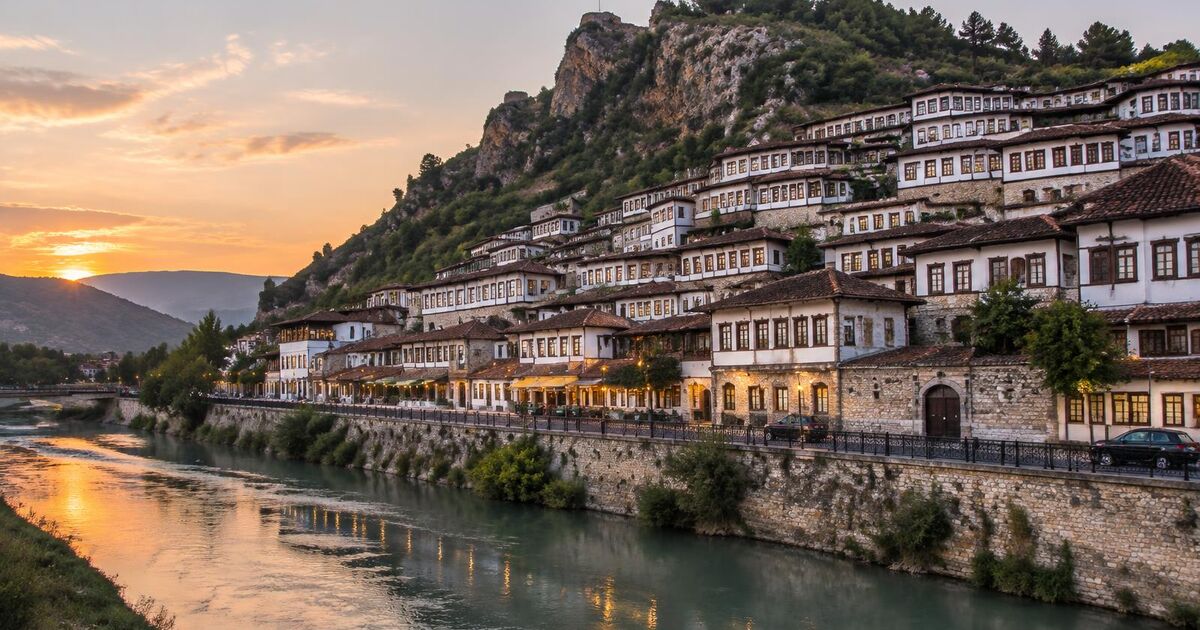
Berat sits along the Osum River and is recognized for its tiers of whitewashed Ottoman houses with uniform timber-framed windows, earning it the label of the town of a thousand windows. The city is divided into the Mangalem, Gorica, and Kala quarters. The hilltop Kala remains an inhabited citadel containing Byzantine churches, the Onufri National Iconographic Museum, and Ottoman-era residential alleys. Admission tickets for castles and museums in both towns generally cost between 400 ALL and 600 ALL (around 4 EUR to 6 EUR, prices change).
What does the Lake Ohrid UNESCO site include in Albania?
The Albanian portion of the Lake Ohrid UNESCO site includes the southwestern lake waters, the shoreline around Pogradec, and the historic peninsula of Lin.
Lake Ohrid is one of the world's oldest and deepest lakes, estimated to be up to three million years old. It supports over 200 endemic aquatic species, including the native Ohrid trout (koran). In 2019, UNESCO expanded the original North Macedonian inscription across the border to include the Albanian lake basin, recognizing both its limnological importance and ancient settlement history.
On the Albanian shore, the village of Lin features ruins of a 6th-century paleo-Christian basilica containing mosaic pavements. Further south, the town of Pogradec offers a lakeside promenade, while nearby Drilon features protected freshwater springs fed by Lake Prespa. Travel from Tirana to Pogradec takes roughly two hours by car along the national highway via Elbasan.
How much does it cost to visit Albania's UNESCO heritage sites?
Entry tickets to individual cultural parks, fortresses, and museums range from 400 ALL to 1,200 ALL (4 EUR to 12 EUR), with public transit costing modest fares.
A budget traveler visiting all primary cultural locations should plan for site admissions, local transit, and guide fees. Public regional minibuses, known as furgons, connect major hubs like Tirana, Sarandë, and Gjirokastër for fares typically between 400 ALL and 1,500 ALL (4 EUR to 15 EUR, prices change) per route. Private car rentals usually range from 20 EUR to 45 EUR per day depending on the season.
Credit cards are accepted at major ticket windows such as Butrint, but smaller historical houses, regional museums, and intercity buses operate strictly on cash in Albanian lek. Budgeting between 35 EUR and 70 EUR per day covers basic lodging, meals, public transport, and entry tickets for a multi-day heritage route through southern Albania.