Albania's History in 10 Minutes: A Complete Overview
Updated 2026-11-01 · 10 min read · Prices and schedules change — check locally.
How to Explore Albania's Historic Eras Chronologically
- Visit Illyrian and Greco-Roman archaeological ruins at Butrint National Park or Apollonia.
- Tour medieval fortresses such as Rozafa Castle in Shkodër and the citadel in Krujë.
- Walk through preserved Ottoman-era stone quarters in Gjirokastër and Berat.
- Examine Cold War defense sites and security apparatus archives at Bunk'Art and the House of Leaves in Tirana.
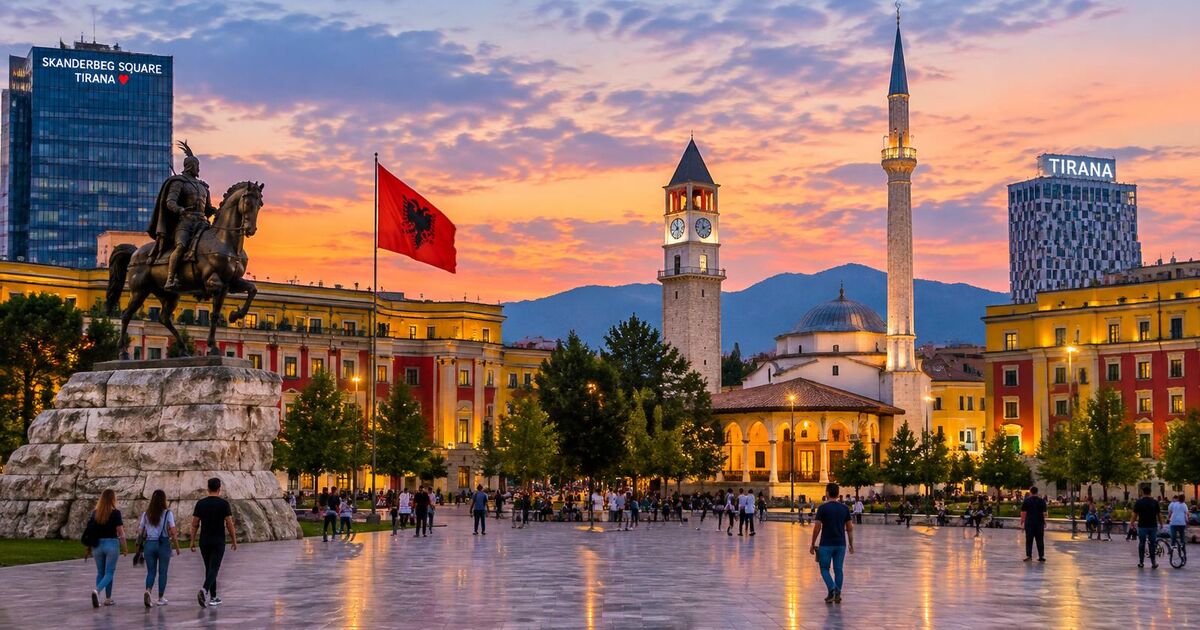
- Observe modern post-communist urban development around Skanderbeg Square in Tirana.
Who were the ancient Illyrians and what is their link to Albania?
The Illyrians were Indo-European tribes who inhabited the western Balkan Peninsula during antiquity, recognized by historians and linguists as the primary ancestors of modern Albanians.
Illyrian tribes such as the Ardiaei, Taulantii, and Chaonians established kingdoms throughout the western Balkans during the Bronze and Iron Ages. They engaged in extensive regional trade and naval warfare with neighboring Greek city-states and expanding Roman legions. Key administrative centers included Scodra (modern Shkodër) and coastal settlements along the Ionian and Adriatic coasts.
Modern Albanians trace their linguistic lineage to the ancient Illyrian language, which forms an independent branch of the Indo-European language tree. Archaeological sites across Albania, including early burial tumuli and defensive stone walls, confirm continuous material culture from these tribal settlements through late antiquity.
How did Roman and Byzantine rule transform the region?
Rome conquered Illyria in 168 BC, integrating the territory into the empire and building the Via Egnatia, followed by centuries of Byzantine imperial administration that firmly established Christian traditions.
Following the defeat of Illyrian King Gentius in 168 BC, Rome organized the territory into the province of Illyricum. Roman engineers constructed major infrastructure, most notably the Via Egnatia. This military and trade road began at Dyrrhachium (modern Durrës) and linked the Adriatic coast directly with Byzantium (later Constantinople), stimulating commercial traffic across central Albania.
When the Roman Empire divided in 395 AD, Albania fell under Byzantine rule. The territory absorbed significant Byzantine architectural, administrative, and religious influences. Fortifications expanded along the southern coast near Sarandë and Vlorë, and early Christian basilicas developed into enduring regional bishoprics.
What took place during the Ottoman era and Skanderbeg's resistance?
Ottoman forces entered Albania in the late 14th century, meeting fierce resistance led by national hero Gjergj Kastrioti Skanderbeg before incorporating the territory into the empire for over four centuries.
In 1443, nobleman Gjergj Kastrioti Skanderbeg unified Albanian princes through the League of Lezhë, mounting a 25-year military campaign that delayed Ottoman westward expansion. Operating primarily from his base at Krujë Castle, Skanderbeg successfully resisted multiple imperial sieges until his death in 1468. Albania fell under complete Ottoman control by the early 16th century.
Ottoman rule lasted until 1912, fundamentally transforming Albanian culture, urban planning, and demographics. A majority of the population gradually converted to Islam to obtain tax relief and social mobility within the empire. Towns such as Gjirokastër, Berat, and Korçë developed distinct Ottoman architectural styles characterized by whitewashed stone houses, cobblestone bazaars, and neighborhood mosques alongside Orthodox churches.
| Historical Era | Approximate Dates | Key Locations and Heritage Sites |
|---|---|---|
| Illyrian Antiquity | 1000 BC – 168 BC | Shkodër (Rozafa), Apollonia, Butrint |
| Roman & Byzantine | 168 BC – 14th Century | Durrës Amphitheatre, Via Egnatia route |
| Ottoman Empire | 1479 – 1912 | Krujë Castle, Gjirokastër, Berat |
| Communist Regime | 1944 – 1991 | Bunk'Art 1 & 2 (Tirana), Spaç Prison |
| Modern Republic | 1991 – Present | Skanderbeg Square (Tirana), Vlorë Waterfront |
How did the communist regime isolate Albania from 1944 to 1991?
Led by dictator Enver Hoxha, Albania's communist regime severed ties with foreign powers and imposed extreme ideological control, constructing hundreds of thousands of defensive concrete bunkers.
Following World War II, Enver Hoxha established the Party of Labour of Albania, initiating one of the most closed and repressive regimes in modern history. The government successively broke alliances with Yugoslavia, the Soviet Union, and China over ideological disputes, leaving Albania entirely isolated by the late 1970s. In 1967, the state outlawed religion completely, declaring Albania the world's first atheist state and converting or destroying hundreds of churches and mosques.
The state police, known as the Sigurimi, used pervasive surveillance, internal exile, and forced labor camps like Spaç to eliminate dissent. Fearing foreign invasion, Hoxha ordered the construction of over 173,000 military bunkers across beaches, mountains, and farmlands. Today, visitors can explore this period at museums such as Bunk'Art 1 and the House of Leaves in Tirana. Entry tickets generally cost between 500 and 1,000 ALL (approximately 5 to 10 EUR, though prices change).
What characterized Albania's transition to a modern democracy after 1991?
Student demonstrations ended single-party rule in 1991, leading to free elections, a period of financial and social crisis in 1997, and eventual integration into Western security and economic alliances.
Mass student-led protests in Tirana prompted the fall of the communist government in December 1990, followed by the first multi-party elections in 1991. The early transition saw heavy outward migration and economic instability, culminating in the 1997 civil crisis caused by the failure of nationwide pyramid investment schemes. Order was restored with United Nations intervention, enabling significant political and legal reforms.
Since the early 2000s, Albania has stabilized its macroeconomic framework and upgraded its transport corridors from the northern border through Shkodër down to Përmet and Sarandë. Albania joined NATO in 2009 and gained European Union candidate status in 2014, with ongoing international diplomacy centered on institutional transparency and judicial reforms.