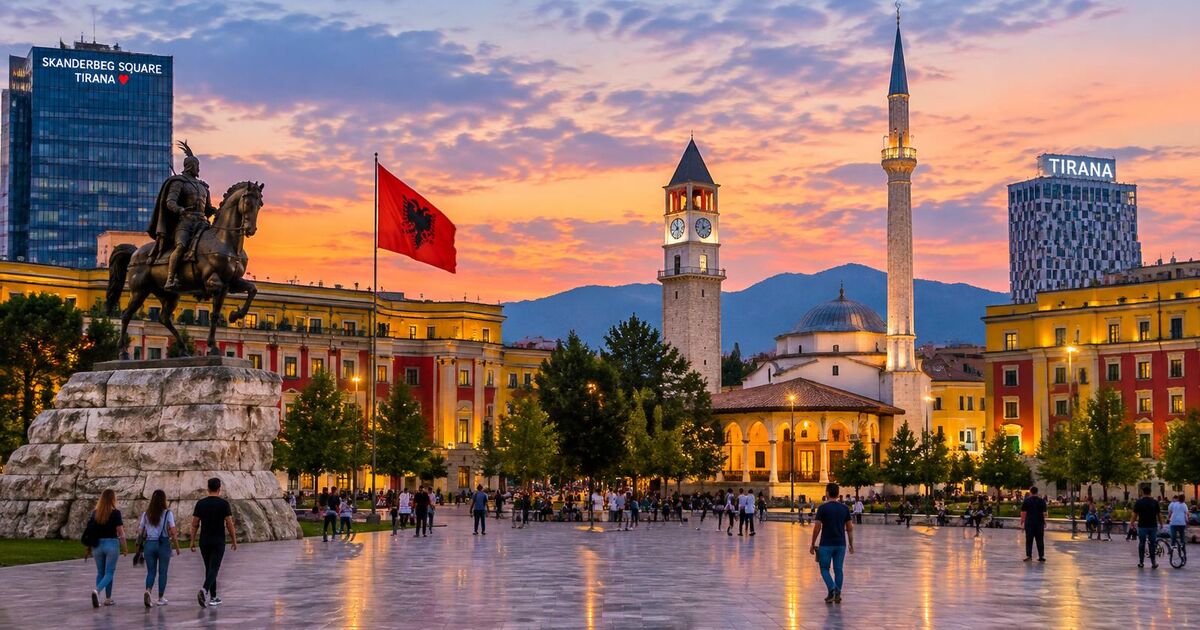
Albanian Language Basics: Essential Phrases for Travellers
Updated 2026-11-01 · 6 min read · Prices and schedules change — check locally.
How to Learn Essential Albanian for Travel
- Memorize everyday greetings, particularly 'Përshëndetje' (Hello) and 'Mirëdita' (Good day).
- Master courtesy expressions including 'Ju lutem' (Please) and 'Faleminderit' (Thank you).
- Learn the distinctive sound of the letter 'ë', which is pronounced like a neutral schwa.
- Practice counting numbers from 1 to 10 to handle everyday cash payments in lek.
- Save key navigational and dining phrases on your phone for offline reference in rural areas.
What are the most common Albanian greetings?
The standard neutral greeting in Albania is 'Përshëndetje' (Hello), used at any time of day, while 'Mirëdita' (Good day) and 'Mirëmbrëma' (Good evening) are widely used formal greetings.
Greeting people when entering a shop, restaurant, or family-run guesthouse is standard etiquette across Albania. While younger people in urban centers often use 'Ç'kemi' (What's up?) or 'Tung' (an informal hi/bye), travelers should default to 'Përshëndetje'. When entering businesses in Korçë, Gjirokastër, or Shkodër, older proprietors appreciate formal greetings like 'Mirëdita' or 'Mirëmëngjes' (Good morning).
Parting expressions are equally straightforward. 'Mirupafshim' is the standard way to say goodbye across all regions. Adding 'Faleminderit shumë' (Thank you very much) when leaving an establishment demonstrates good manners and is universally welcomed.
| English | Albanian | Pronunciation |
|---|---|---|
| Hello | Përshëndetje | pur-shen-DET-ye |
| Good morning | Mirëmëngjes | meer-mun-JES |
| Good day | Mirëdita | meer-DEE-tah |
| Good evening | Mirëmbrëma | meer-UM-bruh-mah |
| Goodbye | Mirupafshim | mee-roo-PAHF-sheem |
| Thank you | Faleminderit | fah-lem-een-deh-REET |
| Please | Ju lutem | yoo LOO-tem |
| Yes / No | Po / Jo | poh / yoh |
How do you pronounce difficult Albanian letters?
Albanian uses a 36-letter Latin alphabet where almost every letter represents a single consistent sound, including nine compound letter pairings.
The most frequent letter that confuses visitors is 'ë'. When unstressed or at the end of words, it functions like the weak English 'a' in 'about' or is nearly silent, while in stressed positions it sounds like 'uh'. The letter 'c' is pronounced like 'ts' in 'cats', whereas 'ç' sounds like the English 'ch' in 'check'.
Compound consonants represent distinct sounds. 'Xh' sounds like the English 'j' in 'jam', while 'x' makes a 'dz' sound. The letter 'gj' is a soft voiced palatal sound similar to the 'gy' in 'regular', and 'q' represents an unvoiced palatal stop resembling 'ch' spoken from the back of the palate. Most Albanian words place stress on the penultimate syllable.
What Albanian words are needed for dining and shopping?
Essential words for shops and restaurants include 'Sa kushton?' (How much does it cost?), 'Faturën, ju lutem' (The bill, please), and 'Ujë' (Water).
When eating out in coastal areas like Vlorë or Sarandë, staff frequently understand English, but menus in modest inland eateries may only appear in Albanian. Key terms include 'bukë' (bread), 'mish' (meat), 'djathë' (cheese), and 'kafe' (coffee). Ordering an espresso or Turkish coffee ('kafe turke') is central to local hospitality.
Cash remains the standard method of payment in small stores and rural produce markets. Knowing basic numbers helps avoid confusion when bills are quoted in Albanian lek. Note that prices change over time, and some older shopkeepers still quote prices in 'old lek' (adding an extra zero verbally), so clarifying 'lek të reja' (new lek) or having the vendor write the amount down is standard practice.
| English | Albanian | Pronunciation |
|---|---|---|
| How much is it? | Sa kushton? | sah KOOSH-ton |
| The bill, please | Faturën, ju lutem | fah-TOO-run yoo LOO-tem |
| Water (still) | Ujë pa gaz | OO-yuh pah gahz |
| Sparkling water | Ujë me gaz | OO-yuh meh gahz |
| Bread | Bukë | BOO-kuh |
| Beer | Birrë | BEER-ruh |
| One / Two / Three | Një / Dy / Tre | nyuh / dee / treh |
| Lek (currency) | Lekë | LEH-kuh |
Is English widely spoken throughout Albania?
English is widely spoken by younger generations and hospitality workers in Tirana, Shkodër, and coastal resorts, but is rare among older residents in rural regions.
In cities like Tirana, Sarandë, and Vlorë, staff in hotels, international agencies, and cafes speak proficient English. Younger Albanians often learn English in school and through digital media, making direct communication relatively easy in tourist areas.
In rural mountain districts such as Përmet or villages around Gjirokastër, older Albanians are far more likely to speak Italian or Greek than English. Italian is extensively understood across the country due to historical trade and Italian television broadcasts. Knowing a few basic Albanian phrases ensures you can navigate bus terminals and rural shops without friction.
How do Albanians nod yes and no?
Traditional Albanian head gestures are the opposite of Western conventions: a side-to-side shake indicates agreement, while a slight upward nod or head tilt means 'no'.
This gesture convention is shared with neighboring Bulgaria. When an Albanian tilts their head horizontally or shakes it gently from shoulder to shoulder, they are communicating 'Po' (Yes). Conversely, tilting the head back slightly, often accompanied by a subtle tongue-click or raised eyebrows, signifies 'Jo' (No).
In urban Tirana and tourist resorts, service workers frequently adapt their body language to international tourists. However, in traditional markets, taxi ranks, and regional towns, visitors will routinely encounter the traditional gestures. Listening for the verbal cue 'Po' or 'Jo' prevents misunderstandings.