Albanian Wine and Raki Guide: Indigenous Grapes and Regions
Updated 2026-11-01 · 5 min read · Prices and schedules change — check locally.
How to Drink Raki in Albania
- Order raki alongside a small glass of still water and a simple meze plate such as white cheese or olives.
- Toast your companions before drinking by maintaining eye contact and saying Gëzuar.
- Sip the spirit slowly to appreciate the fruit aromatics rather than taking it as a single shot.
- Drink raki alongside a morning espresso or as a dinner aperitif, following local custom.
What are the main indigenous Albanian wine grapes?
Albania's primary native grapes include Kallmet and Shesh i Zi for red wines, and Shesh i Bardhë, Pulës, and Debinë for whites.
Kallmet is Albania's most prominent red grape, cultivated mainly in the northwest around Shkodër and Lezhë. It yields medium-to-full-bodied wines with notes of dark berries, wild herbs, and earth. Shesh i Zi, grown in central Albania near Tirana and Durrës, produces fruit-forward reds with balanced acidity and soft tannins.
For white wines, Shesh i Bardhë is the dominant native variety, known for its crisp acidity, citrus profile, and floral notes. Pulës is concentrated in the Berat region, where it produces mineral-driven, dry whites that pair well with local lamb and sheep's milk cheese.
Where are the top wine regions to visit in Albania?
The main wine regions are Shkodër and Lezhë in the north, Berat and Durrës in central Albania, and Përmet and Korçë in the south.
Northern Albania benefits from microclimates influenced by Lake Shkodër and the Adriatic coastline, making it the ideal terroir for Kallmet. The Zadrima plain between Lezhë and Shkodër is home to several family-run wineries that integrate vineyard tours with traditional agrotourism dining.
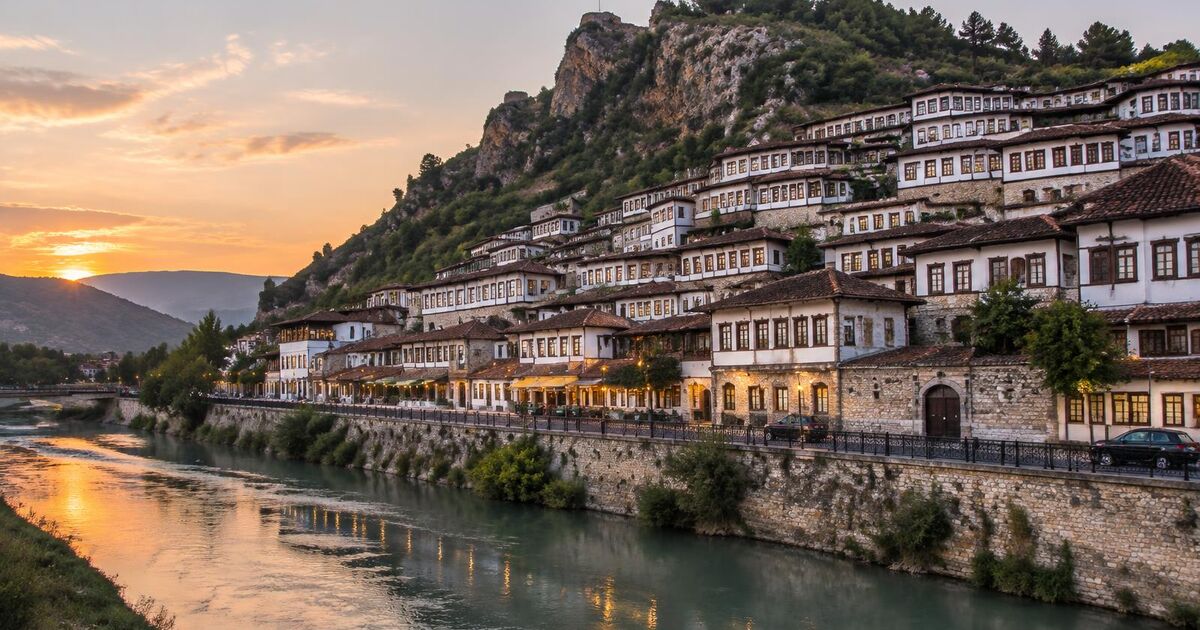
Central and southern wine regions feature limestone hills and higher altitudes. Wineries around the historic Ottoman city of Berat and the Vjosa valley near Përmet offer tastings in stone cellars, with many allowing drop-in visits without formal advance reservations.
Winery tasting fees typically include three to five pours accompanied by local snacks. Prices change over time and vary by winery tier.
| Region | Key Grape Varieties | Notable Wine Styles | Typical Tasting Cost |
|---|---|---|---|
| Northern (Lezhë & Shkodër) | Kallmet, Ceruja | Structured reds, orange wines | 1,500–3,000 ALL (€15–€30) |
| Central (Tirana, Durrës, Berat) | Shesh i Zi, Shesh i Bardhë, Pulës | Crisp whites, medium-bodied reds | 1,200–2,500 ALL (€12–€25) |
| Southern (Përmet, Korçë, Leskovik) | Debinë, Vlosh, Mavrud | High-altitude reds, aromatic rosés | 1,000–2,000 ALL (€10–€20) |
What is Albanian raki and how is it made?
Albanian raki is a clear, unflavored fruit brandy distilled from fermented grape pomace, wild plums, or berries, usually containing 40% to 50% alcohol.
Unlike Greek ouzo or Turkish raki, traditional Albanian raki does not contain aniseed and turns neither cloudy nor sweet when mixed with water. Distillation takes place in copper stills (kazan) across villages immediately after the autumn harvest. Grape raki (raki rrushi) is the most standard, though plum (raki kumbulle) and cornelian cherry (raki thane) variants are regional favorites.
Home distillation (raki shtëpie) remains a major household tradition. Homemade raki is frequently served in village cafés and guesthouses directly from unmarked decanters and is often noticeably stronger than factory-bottled alternatives.
What is the cultural etiquette for drinking raki in Albania?
Raki is treated as a social bonding ritual, served alongside toasts and sipped slowly either with morning coffee or evening meze.
In Albanian homes, hosts almost universally offer a small glass of raki to guests upon arrival as a mark of hospitality. Refusing outright can be seen as dismissive; taking at least a polite sip acknowledges the gesture. The standard toast is Gëzuar, said while locking eyes with others at the table.
Many locals drink a shot of raki alongside their first morning espresso, a routine believed to stimulate the metabolism. In the evening, it serves as an aperitif, accompanied by savory meze such as pickled green peppers, salted sheep cheese, and cured sausage.
How much do wine and raki cost in Albania?
A shot of raki costs 100 to 200 ALL (€1 to €2), while a standard bottle of quality Albanian wine costs 800 to 2,500 ALL (€8 to €25).
In local neighborhood bars, a measure of house raki is inexpensive, typically between 100 and 150 ALL (€1 to €1.50). High-end urban restaurants in Tirana charge 300 to 500 ALL (€3 to €5) for aged or specialty fruit varieties. Supermarket wines start at 600 ALL (€6), while boutique vineyard reserves rarely exceed 3,500 ALL (€35).
Small taverns and village cafés prefer cash payments in lek for single drinks. Urban wine bars and established agrotourism sites accept credit cards. Note that prices vary across regions and are subject to currency fluctuations and inflation.