Borsh Beach Guide: Albania's Longest Riviera Beach
Updated 2026-11-01 · 5 min read · Prices and schedules change — check locally.
How to Plan a Visit to Borsh Beach
- Arrive in southern Albania by flying to Tirana International Airport or taking a ferry from Corfu to Sarandë.
- Drive along the SH8 coastal highway from Vlorë or Sarandë, or board a regional public minibus heading toward Himarë.
- Turn off the SH8 down the two-kilometer access road that leads from Borsh village to the seafront.
- Park in one of the gravel lots behind the promenade and choose between a private beach club or an open public section.
- Combine swimming with a hike or drive up to Borsh Castle above the village for a view of the coastal plain.
How long is Borsh Beach and what is the terrain like?
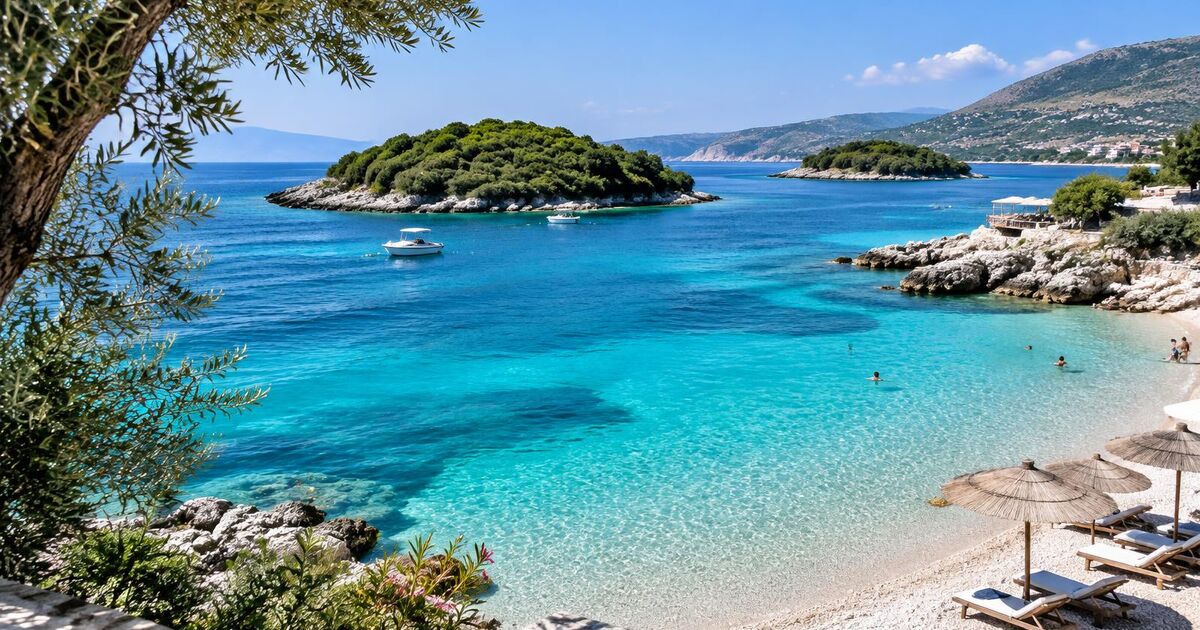
Borsh Beach is roughly seven kilometers long, making it the longest beach on the Albanian Riviera. The shore is made of light-colored pebbles and gravel rather than fine sand.
The beach extends from the cliffs of Qeparo in the north to the edge of Lukovë in the south. Behind the coastline sits a wide plain filled with thousands of citrus and olive trees, which keeps large resort developments set back from the waterline. Because of its sheer length, Borsh rarely feels crowded, even during July and August.
The water at Borsh is clear and deepens quickly within a few meters of entry. Water shoes are recommended because the smooth limestone pebbles can be uncomfortable to walk on bare-footed. The sea is typically calm in the morning, with light afternoon onshore breezes producing mild waves.
How do you get to Borsh Beach from Tirana, Vlorë, or Sarandë?
Borsh is located directly along the SH8 highway in southwestern Albania. It is easily reachable by rental car or regional minibus from Sarandë, Himarë, and Vlorë.
Drivers traveling from Tirana can take the A2 motorway to Vlorë, cross the Llogara Pass, and continue south down the coast. The drive takes between four and five hours depending on seasonal traffic. From Sarandë, the trip north along the SH8 covers about 40 kilometers and takes approximately one hour on a fully paved, winding road.
Public minibuses (furgons) run between Sarandë and Vlorë or Himarë throughout the day and stop in Borsh village. From the main road in the village, travelers must walk about two kilometers downhill or take a local taxi to reach the sea. Hiring a car provides the most flexibility for exploring the surrounding coastal area.
Travelers should verify seasonal schedules locally, as regional bus frequencies decrease outside the summer months.
| Route | Distance | Average Travel Time | Estimated Cost (Prices Change) |
|---|---|---|---|
| Sarandë to Borsh (Minibus) | 40 km | 1 hour 15 mins | €3 - €4 (300 - 400 ALL) |
| Sarandë to Borsh (Taxi) | 40 km | 50 mins | €30 - €45 (3,000 - 4,500 ALL) |
| Himarë to Borsh (Minibus) | 15 km | 25 mins | €1.50 - €2.50 (150 - 250 ALL) |
| Tirana to Borsh (Car) | 225 km | 4 - 4.5 hours | €35 - €50 fuel (3,500 - 5,000 ALL) |
How much does it cost to visit Borsh Beach?
Borsh is one of the more affordable beach destinations on the Riviera. Daily sunbed rentals cost between €5 and €10 (500 to 1,000 ALL), and basic meals cost €7 to €15 (700 to 1,500 ALL) per person.
Sunbed prices in Borsh are noticeably lower than in nearby hotspots like Ksamil or Dhërmi. Most beach bars charge around €5 to €8 (500 to 800 ALL) for a pair of loungers and an umbrella in June and September, rising to around €10 (1,000 ALL) in peak August. Large sections of the seven-kilometer shore remain entirely free for visitors who bring their own beach towels and umbrellas.
Dining along the beach includes family-run tavernas serving grilled fish, calamari, Greek salads, and traditional Albanian dishes like byrek and qofte. A standard dinner for two with drinks generally costs €20 to €35 (2,000 to 3,500 ALL). Double rooms in seaside guesthouses range from €30 to €70 (3,000 to 7,000 ALL) per night, though prices change based on season and proximity to the sea.
What amenities and facilities are available at Borsh Beach?
The central part of Borsh Beach offers paved parking, beach clubs, showers, restrooms, and small grocery shops. The outer northern and southern stretches remain unserviced and rural.
A paved road runs parallel to the central portion of the beach, hosting cafes, casual restaurants, and mini-markets that stock drinks and sunscreen. Showers and changing cabins are managed by individual beach bars for their paying customers. Several operators offer seasonal water sport rentals, such as kayaks, stand-up paddleboards, and pedal boats.
Campers and campervan owners frequently use the open areas set back from the beach, where several informal and organized campsites operate during summer. Anyone looking for total quiet can walk 15 to 20 minutes north or south along the stones away from the central car park to find unserviced stretches without music or sunbeds.
What historical attractions can you see near Borsh Beach?
The primary historic site is Borsh Castle (Kalaja e Sopotit), situated on the hill behind the village. Visitors can also explore an 18th-century mosque inside the fortress and the natural springs in the village center.
Borsh Castle stands approximately 300 meters above sea level on Sopot Hill. Its fortifications date back to the 4th century BC as an Illyrian settlement, with later additions built by the Byzantines, Venetians, and Ali Pasha of Tepelenë. Inside the walls are the ruins of the Mosque of Haxhi Bendo, constructed in the late Ottoman period. The castle is accessible via a steep gravel road and offers panoramic views over the Ionian Sea and the island of Corfu.
In the village itself along the SH8 highway, travelers stop at Ujëvara e Borshit, a natural freshwater spring that flows directly through outdoor restaurant terraces shaded by plane trees. Driving 15 minutes north toward Himarë brings travelers to the triangular Venetian-Ottoman fortress at Porto Palermo Bay.