Religion in Albania: Mosques, Churches, and Tolerance
Updated 2026-11-01 · 6 min read · Prices and schedules change — check locally.
How to Visit Mosques and Churches in Albania Respectfully
- Dress modestly by covering shoulders and knees before entering any active house of worship.
- Remove your shoes at the entrance when entering active mosques or Bektashi tekkes.
- Women should carry a lightweight scarf to cover their hair when entering active mosques.
- Avoid visiting during active Friday afternoon prayers at mosques or Sunday morning church services unless attending to worship.
- Prepare small cash donations between 100 and 200 ALL (around 1 to 2 EUR; prices change) as entry is usually free.
What are the main religions in Albania?
The main religious traditions in Albania are Sunni Islam, Bektashi Islam, Eastern Orthodoxy, and Roman Catholicism.
According to national census figures, the majority of religious Albanians identify as Muslim, split between mainstream Sunni Islam and the Bektashi Sufi order. Eastern Orthodox Christians form the second-largest group, concentrated primarily in southern and central regions such as Korçë, Gjirokastër, and Sarandë. Roman Catholics make up a significant population in northern Albania, with Shkodër serving as the historic center of Albanian Catholicism.
Despite these traditional affiliations, Albania is culturally secular. Decades of forced atheism, combined with a strong national identity summarized by the nineteenth-century poet Pashko Vasa's line 'the faith of the Albanian is Albanianism', mean that religious practice is generally moderate. Intermarriage between people of different faiths is common and socially unremarkable.
| Faith Tradition | Historic Center / Region | Notable Sites to Visit |
|---|---|---|
| Sunni Islam | Nationwide (Tirana, Shkodër, Elbasan) | Et'hem Bey Mosque (Tirana), Lead Mosque (Shkodër) |
| Bektashi Order | Tirana, Krujë, Skrapar | World Headquarters of the Bektashi (Tirana) |
| Eastern Orthodoxy | Korçë, Berat, Gjirokastër, Sarandë | Resurrection of Christ Cathedral (Korçë), Holy Trinity (Berat) |
| Roman Catholicism | Shkodër, Lezhë | St. Stephen's Cathedral (Shkodër) |
Why is religious harmony so strong in Albania?
Religious harmony in Albania stems from a shared linguistic and cultural identity that transcends sectarian divisions, reinforced by historic coexistence under Ottoman and modern rule.
Throughout foreign occupations, Albanians prioritized ethnic preservation, the Albanian language, and customary law over sectarian rivalries. During the Ottoman period, families often had members of different faiths, and holidays were shared across communities. This shared background created a social norm where national solidarity took precedence over religious doctrine.
A prominent example of this tolerance occurred during World War II, when Albanians, guided by the ethical code of Besa, rescued their entire domestic Jewish community and hundreds of Jewish refugees fleeing other parts of Europe. Today, holidays like Eid al-Fitr, Easter, and Christmas are widely celebrated across communities, with neighbors exchanging visits and traditional foods regardless of their personal faith.
What happened to religion during the communist era in Albania?
In 1967, Albania declared itself the world's first atheist state under dictator Enver Hoxha, outlawing all religious practices and seizing or destroying sacred buildings.
The communist regime launched an aggressive campaign to eliminate all religious institutions, viewing them as foreign influences and potential threats to state control. Hundreds of historic mosques, churches, monasteries, and tekkes were demolished, while others were repurposed into sports arenas, warehouses, cinemas, or cultural centers. Only a small fraction of architecturally significant structures, such as the Et'hem Bey Mosque in Tirana, survived as cultural monuments.
Clergy from all denominations faced brutal persecution, including imprisonment, forced labor, and execution. Practicing rituals, fasting, possessing religious books, or baptizing children had to be done in complete secrecy to avoid severe penalties. Freedom of thought and worship was finally restored in late 1990, allowing citizens to reopen surviving buildings and construct new places of worship.
What is the Bektashi Order and what is its role in Albania?
The Bektashi Order is an Islamic Sufi movement known for its mystical, open, and tolerant interpretation of faith, with its international headquarters located in Tirana.
Founded in the thirteenth century, the Bektashi order played a major historical role in the Balkans. When modern Turkey banned dervish lodges in 1925, the Bektashi leadership relocated its global seat to Tirana. Bektashism emphasizes inner spirituality, human dignity, gender equality, and rational interpretation of scripture, with rituals often conducted in the local vernacular rather than Arabic.
Visitors can tour the World Bektashi Headquarters (Kryegjyshata Botërore Bektashiane) on the eastern edge of Tirana. The complex features a museum, an archive, and a tekke decorated with intricate ceiling mosaics. Entry is typically free, though donations of 200 to 500 ALL (around 2 to 5 EUR; prices change) are welcome. A major annual pilgrimage takes place in August on Mount Tomorr near Berat.
Which historic religious sites should travelers visit in Albania?
Top religious heritage sites include the Et'hem Bey Mosque in Tirana, the medieval churches of Voskopojë near Korçë, and the Lead Mosque in Shkodër.
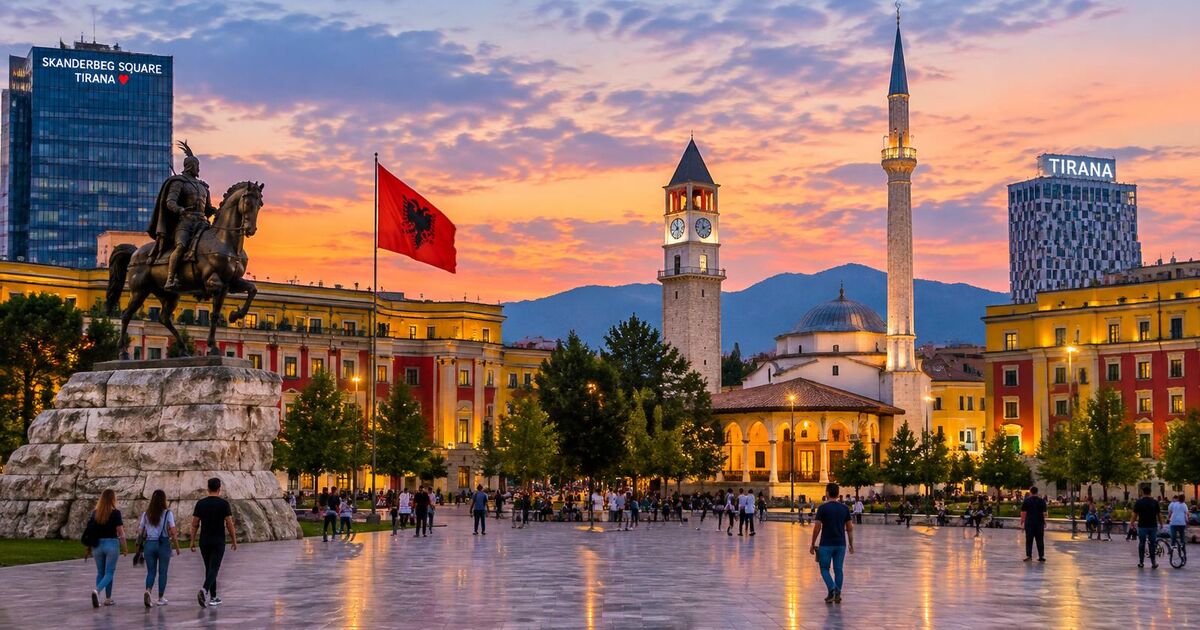
In Tirana, the eighteenth-century Et'hem Bey Mosque is known for rare exterior frescoes depicting trees, waterfalls, and bridges, themes uncommon in traditional Islamic art. Nearby, the Resurrection of Christ Orthodox Cathedral and St. Paul's Catholic Cathedral showcase contemporary religious architecture. In Shkodër, St. Stephen's Cathedral serves as a key site of twentieth-century history, having been turned into a sports hall under communism before Pope John Paul II visited to reopen it in 1993.
For Byzantine art, the hillside fortress of Berat contains the Church of the Holy Trinity and the Church of the Dormition of the Virgin, which houses the Onufri National Iconographic Museum. Entry tickets to the museum generally cost between 400 and 600 ALL (approx 4 to 6 EUR; prices change). Further east, the mountain village of Voskopojë near Korçë preserves several eighteenth-century post-Byzantine basilicas containing extensive interior wall paintings.