Things to Do in Himarë: Beaches, Old Town & Porto Palermo
Updated 2026-11-01 · 5 min read · Prices and schedules change — check locally.
How to Spend 48 Hours in Himarë
- Arrive in Himarë and check in to accommodation near the central promenade or Livadhi Beach.
- Climb or drive up to Himara Castle in the Old Town to tour the stone alleys and Byzantine church ruins.
- Spend the afternoon swimming at Llaman Beach or Potam Beach.
- Drive 7 km south to tour Porto Palermo Castle and view the Cold War naval tunnel across the bay.
- Take a boat transfer or hike down to Gjipe Beach to explore the sea caves and the entrance of Gjipe Canyon.
What is there to see in Himarë Old Town and Himara Castle?
Himara Castle stands on a steep hill above the modern town, offering stone alleys, defensive walls, and the Byzantine Church of Saint Mary of Athali.
The Old Town of Himarë, situated on the hill north of the modern beach settlement, dates back over two millennia to the ancient Chaonian settlement of Chimarra. Visitors can walk through cobblestone alleys between stone houses, many of which remain occupied. Inside the fortress perimeter stand the ruins of several churches, including the Church of Saint Mary of Athali and the Episcopal Church, featuring preserved Byzantine wall frescoes.
Admission to the castle ruins is either free or requires a small municipal entrance fee between 100 and 300 ALL (€1 to €3), though prices change depending on local council updates. The site provides views over the Ionian Sea and Livadhi Beach below. The castle is best visited during the early morning or before sunset, as there is minimal shade within the grounds.
How do you visit Porto Palermo Castle and the bay?
Porto Palermo Castle is situated on a rocky peninsula 7 km south of Himarë, accessible by car, taxi, or regional bus along the SH8 highway.
Porto Palermo Castle was built in its current triangular form during the early 19th century, associated with the Ottoman-Albanian ruler Ali Pasha of Tepelenë. The fortress features thick stone masonry, vaulted corridors, three corner bastions, and an open rooftop platform overlooking the enclosed bay. Admission typically costs between 300 and 500 ALL (€3 to €5) per person, but prices change over time.
The surrounding bay is protected from open sea swells, making it suitable for swimming, snorkeling, and kayaking. Across the water, on the northern cliff of the bay, sits a decommissioned Cold War naval submarine tunnel built under the socialist government. While the military facility remains closed to visitors, it is visible from the road and from boats in the bay.
Which are the best beaches in and around Himarë?
The main beaches in and around Himarë include Spille Beach in town, Livadhi Beach to the north, Llaman Beach to the south, and Gjipe Beach.
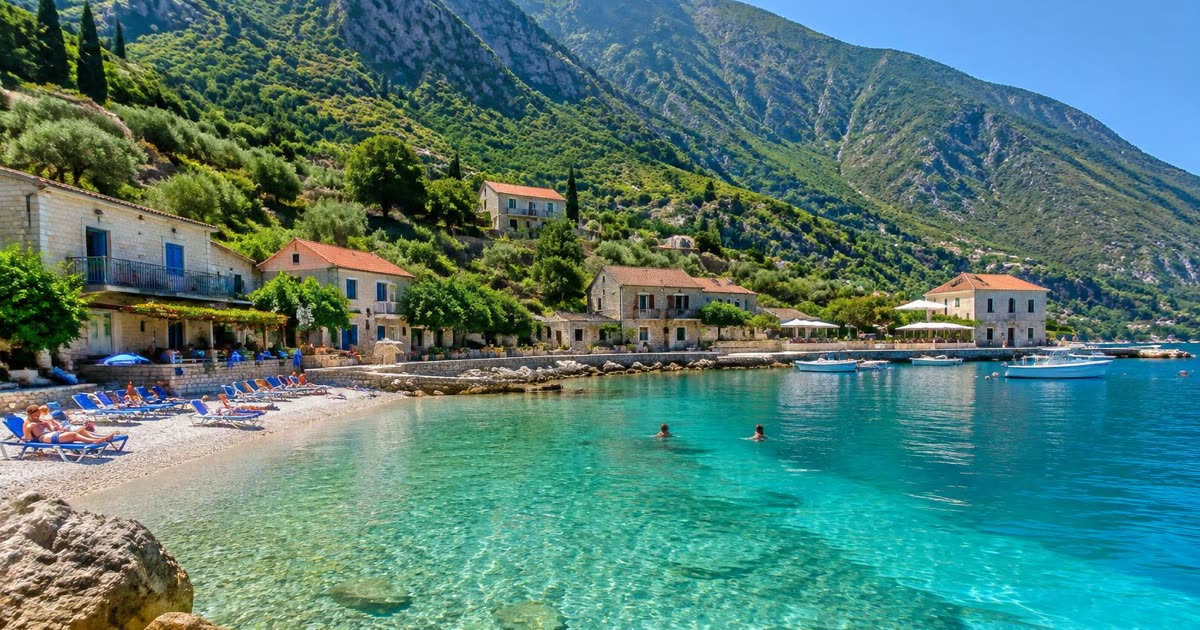
Himarë is surrounded by gravel and pebble beaches noted for water clarity. Spille Beach borders the main seaside pedestrian promenade, offering direct access to restaurants and amenities. Potam Beach lies just south of the town center, characterized by cold underwater freshwater springs. Further north lies Livadhi Beach, a long bay backed by olive groves with extensive accommodation and dining options.
For secluded swimming, Gjipe Beach sits between Himarë and Dhërmi at the terminus of a steep limestone canyon. Reaching Gjipe requires driving on a dirt road to a designated parking area, followed by a 20- to 30-minute hike down a gravel footpath, or taking a taxi boat from Himarë. Renting a pair of sun loungers with an umbrella in the region typically costs between 1,000 and 2,500 ALL (€10 to €25) per day depending on the month and beach; prices change seasonally.
| Beach Name | Distance from Himarë | Shore Type | Primary Feature |
|---|---|---|---|
| Spille Beach | In town center | Coarse sand and fine pebble | Direct access to the seaside boardwalk and shops |
| Potam Beach | 1 km south | Pebble and stone | Cold mountain spring water outflows along the shore |
| Livadhi Beach | 3 km north | Gravel and white pebble | Spacious bay with restaurants and watersport rentals |
| Llaman Beach | 4 km south | White pebble | Enclosed cove flanked by high hills, popular beach clubs |
| Gjipe Beach | 18 km north | Fine pebble | Rugged setting at the mouth of Gjipe Canyon |
How do you get to Himarë using public transit or a car?
Himarë is reached via the SH8 coastal highway, connected by regular regional buses and minibuses running between Vlorë and Sarandë.
Travelers driving from Tirana or Vlorë follow the SH8 highway through the Llogara Tunnel or over the Llogara Pass, reaching Himarë in approximately 3 to 4 hours from Tirana. From Sarandë, the drive north takes roughly 1.5 hours along the coastline. Car rental allows easy stops at beaches and castles that lie outside the town center.
Regional buses (furgons) traveling between Vlorë and Sarandë stop directly in Himarë along the central roadway. One-way fares generally range from 500 to 1,000 ALL (€5 to €10), though prices change depending on fuel costs and operators. Taxis can be found near the town center for trips to Porto Palermo or Livadhi Beach, with fares typically negotiated before departure.
What historical villages can you visit near Himarë?
Old Qeparo, Vuno, and Upper Dhërmi are preserved stone villages near Himarë that showcase traditional southern Albanian stone architecture.
Old Qeparo (Qeparo Fshat) is located about 12 km south of Himarë, perched on the upper slopes of Mount Gjivlash. The settlement consists of narrow pedestrian alleys, centuries-old stone houses, and fortified towers, with views stretching toward the Ionian Sea and the island of Corfu. While partly depopulated in past decades, parts of the village have undergone restoration for residential use and tourism.
North of Himarë along the coastal route lie Vuno and Dhërmi. Both villages feature steep cobblestone paths, whitewashed stone residences, and historic Orthodox churches with red-tile roofs. These mountain villages offer a look into traditional olive farming life and regional history away from the modern shoreline developments.