Who Was Skanderbeg? Albania's National Hero Explained
Updated 2026-11-01 · 6 min read · Prices and schedules change — check locally.
How to Visit Key Skanderbeg Historical Sites in Albania
- Travel 40 kilometers north of Tirana to Krujë Castle and visit the Skanderbeg National Museum.
- Drive to the coastal city of Lezhë to see the Skanderbeg Memorial, his original burial site.
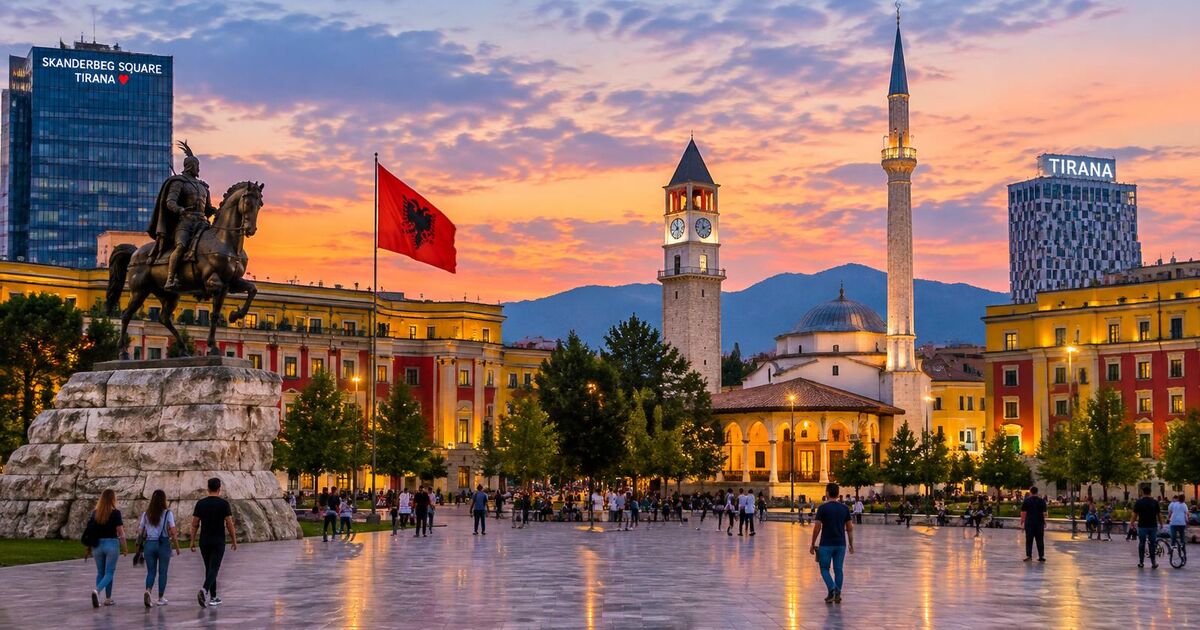
- Walk through central Tirana to examine the 11-meter bronze Skanderbeg Monument in the main plaza.
- Take a short excursion to Petrelë Castle, a strategic defensive outpost run by his sister Mamica.
- Visit the medieval fortress ruins in Shkodër to understand northern Albania's Venetian-era defense network.
Why is Skanderbeg considered Albania's greatest hero?
Skanderbeg earned his status by uniting fractured regional rulers and defeating multiple imperial Ottoman armies between 1443 and 1468.
Born into the noble Kastrioti family, Gjergj Kastrioti was taken as an Ottoman hostage during his youth, trained in elite military tactics, and given the name Iskander Bey (Lord Alexander). In 1443, during the Battle of Niš, he deserted the Ottoman ranks, reclaimed his family's fortress at Krujë, and renounced Islam to return to Christianity.
Over the next 25 years, Skanderbeg used guerrilla warfare, mountain topography, and organized diplomacy to defeat larger Ottoman forces. His successful campaigns prevented the swift conquest of central Albania and delayed imperial expansion into the Italian peninsula. His double-headed eagle family crest became the foundation of Albania's modern national flag.
What was the League of Lezhë and why was it significant?
Founded in 1444, the League of Lezhë was a military and political alliance that united Albanian nobles under a single commander for the first time.
On March 2, 1444, Skanderbeg convened the prominent noble families of the region in the Venetian-controlled cathedral city of Lezhë. Notable participants included the Arianiti, Dukagjini, Muzaka, and Topia families. Skanderbeg was chosen as the primary captain-general of the combined forces, creating the first unified military alliance in Albanian history.
The assembly established a joint defense fund and pooled regional soldiers, creating an effective fighting force of roughly 10,000 to 18,000 men. Although internal disputes among the chieftains arose periodically, the League survived long enough to establish a precedent for modern Albanian statehood and collective territorial defense.
Which Skanderbeg historical sites can travelers visit in Albania?
Travelers can explore several preserved fortifications, including Krujë Castle, the Lezhë Memorial, and Petrelë Castle.
The primary destination for Skanderbeg history is the town of Krujë, situated on the slopes of Mount Krujë. The restored citadel houses the National Ethnographic Museum and the Gjergj Kastrioti Skanderbeg National Museum, designed by architects Pranvera Hoxha and Pirro Vaso. In Lezhë, visitors can view the ruins of Saint Nicholas Church, where Skanderbeg was buried in 1468.
Ticket fees at historical sites remain low, but travelers should keep in mind that prices change over time. Most locations require climbing steep stone paths, so sturdy walking shoes are recommended.
| Site Name | Location | Historical Significance | Ticket Range (Prices Change) |
|---|---|---|---|
| Skanderbeg National Museum | Krujë | Main fortress headquarters and artifact exhibits | 500–700 ALL (€5–€7) |
| Skanderbeg Memorial | Lezhë | Burial site inside Saint Nicholas Church ruins | 300–500 ALL (€3–€5) |
| Petrelë Castle | Petrelë (Tirana area) | Watchtower controlled by Skanderbeg's sister | Free entry (restaurant on-site) |
| National Historical Museum | Tirana | Houses replicas of Skanderbeg's weapons | 500–1000 ALL (€5–€10) |
| Rozafa Castle | Shkodër | Allied northern stronghold during the Ottoman wars | 400–600 ALL (€4–€6) |
Where are Skanderbeg's authentic sword and helmet preserved?
The original weapons and distinctive goat-headed helmet of Skanderbeg are displayed at the Kunsthistorisches Museum in Vienna, Austria.
Following Skanderbeg's death and the eventual Ottoman conquest of Krujë in 1478, his family fled across the Adriatic to the Kingdom of Naples. During the late 16th century, Ferdinand II, Archduke of Austria, acquired Skanderbeg's helmet and two swords for his weapons collection at Ambras Castle in Innsbruck.
The items were later relocated to the Imperial Armory in Vienna. The helmet is made of iron with a bronze goat head mounted on the crown, while the scimitar-style sword features an engraved blade. Albania displays high-quality official replicas in the Skanderbeg Museum in Krujë and the National Historical Museum in Tirana.
What was Skanderbeg's broader impact on European history?
Skanderbeg's defensive stand protected the Adriatic shipping routes and earned him the Latin title 'Athleta Christi' from the Roman Catholic Church.
Between 1444 and 1468, Skanderbeg's military victories shielded Italian ports from naval invasions launched from the Balkan interior. Popes Nicholas V, Callixtus III, and Pius II praised his defensive efforts, providing occasional financial aid and granting him the honorary title 'Athleta Christi' (Champion of Christ).
Major writers, including French philosopher Voltaire and American poet Henry Wadsworth Longfellow, later documented his life. Across Europe, streets, squares, and statues commemorate his military career, including prominent monuments in Rome, Brussels, Pristina, and Skopje.