Why Visit Albania: 15 Reasons to Plan Your Trip
Updated 2026-11-01 · 6 min read · Prices and schedules change — check locally.
How to Plan an Albania Itinerary
- Book flights to Tirana International Airport or take a passenger ferry from Corfu to Sarandë.
- Rent a vehicle at the airport for regional travel, or use intercity furgon minibuses between main towns.
- Divide your schedule between the northern mountains in Theth and historic southern towns like Gjirokastër and Berat.
- Withdraw Albanian lek (ALL) at bank ATMs, as cash is preferred by many smaller guesthouses and restaurants.
- Schedule coastal travel during June or September to avoid high summer traffic and peak lodging rates.
Is Albania an affordable travel destination?
Albania remains one of the most cost-effective travel destinations in Southern Europe, with daily lodging, transport, and dining expenses significantly lower than in Greece, Italy, or Croatia.
Travelers in Albania spend considerably less on daily necessities compared to Western European destinations. A standard sit-down meal at a local tavern typically costs between 600 and 1,500 ALL (approximately 6 to 15 EUR) per person, while an espresso costs between 100 and 150 ALL (1 to 1.50 EUR). Budget accommodations, including guesthouses and small hotels, generally range from 2,500 to 6,000 ALL (25 to 60 EUR) per night outside the peak summer period, though prices change based on season and location.
Regional transportation is also inexpensive. Intercity furgons (minibuses) connect hubs like Tirana, Shkodër, and Vlorë for roughly 400 to 1,200 ALL (4 to 12 EUR) per ride. Rental cars are available at Tirana International Airport, generally starting around 2,000 to 4,500 ALL (20 to 45 EUR) per day during shoulder seasons, keeping overall transport costs manageable.
| Expense Category | Estimated Cost (ALL) | Estimated Cost (EUR) | Notes |
|---|---|---|---|
| Budget guesthouse (double room) | 2,500 - 4,500 ALL | 25 - 45 EUR | Prices change by season |
| Mid-range hotel room | 4,500 - 8,000 ALL | 45 - 80 EUR | Prices change by season |
| Traditional tavern dinner | 700 - 1,500 ALL | 7 - 15 EUR | Main dish and beverage |
| Intercity bus (furgon) | 400 - 1,200 ALL | 4 - 12 EUR | Cash payment on board |
| Espresso coffee | 100 - 150 ALL | 1 - 1.50 EUR | Standard cafe pricing |
What historical and cultural attractions does Albania offer?
Albania features well-preserved UNESCO World Heritage sites, including the Ottoman-era towns of Gjirokastër and Berat, alongside the ancient Greco-Roman ruins of Butrint.
The southern interior contains some of the best-preserved Ottoman architecture in the Balkans. Berat is recognized for its tiered white houses leading up to the historic Kalaja fortress, which remains inhabited today. In Gjirokastër, stone tower houses (kulle) line steep cobblestone streets below a 12th-century fortress that houses an extensive military museum.
Archaeological sites span Greek, Roman, and Byzantine eras. Butrint National Park, situated near Sarandë, contains an ancient theater, a baptistery with mosaic floors, and defensive Venetian fortifications set within a coastal lagoon. Farther north, the city of Shkodër is anchored by Rozafa Castle, providing insight into the Illyrian era, while the ruins of Apollonia near Fier preserve classical temples and a restored monastery.
What are Albania's best natural landscapes and outdoor activities?
Albania offers varied terrain for hiking in the northern Accursed Mountains, rafting along the Vjosa River, and swimming along the Ionian coast.
The northern interior is dominated by the Albanian Alps. The trail connecting the remote mountain villages of Theth and Valbonë is a staple day-hike through high limestone passes. Travelers frequently combine this trek with a crossing on the Lake Koman passenger ferry, which navigates a narrow, sheer-walled reservoir canyon.
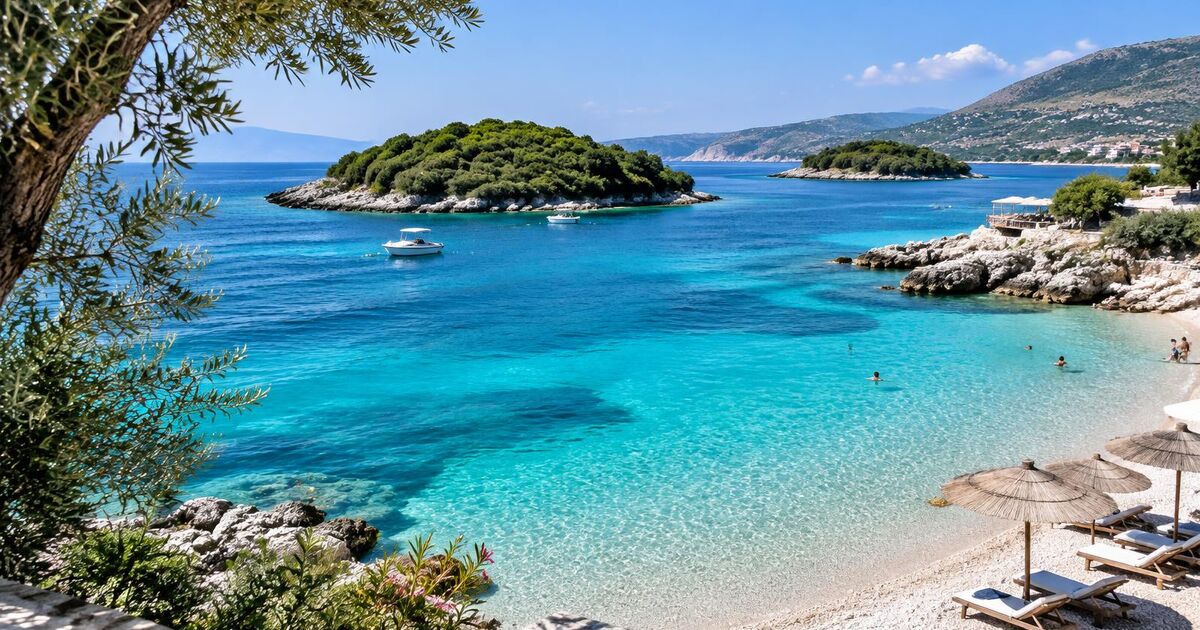
Southern Albania offers thermal and river recreation. The Vjosa River, established as Europe's first wild river national park, provides class II and III white-water rafting routes near Përmet. Nearby, the Benjë thermal baths offer natural sulfur pools beside an Ottoman stone bridge. Coastal recreation centers on the Albanian Riviera between Vlorë and Sarandë, featuring pebble beaches such as Dhërmi, Himarë, and Ksamil.
What is Albanian food and wine culture like?
Albanian cuisine is Mediterranean, emphasizing seasonal vegetables, olive oil, local dairy, roasted meats, and indigenous wine varieties.
Traditional Albanian food reflects Mediterranean and Ottoman influences. Common specialties include tavë kosi, a baked dish of lamb and rice in a spiced yogurt custard, and byrek, phyllo dough pastries filled with wild greens, cheese, or minced meat. In coastal towns such as Vlorë, Sarandë, and Durrës, restaurants serve daily catches of sea bass, sea bream, and squid grilled with olive oil and garlic.
Winemaking has a long history in agricultural districts like Berat and Korçë. Indigenous grapes such as Kallmet produce medium-bodied red wines, while Shesh i Bardhë is used for dry white wines. Raki, an unaged fruit brandy made primarily from grapes or plums, is traditionally served at the beginning or end of meals as a customary sign of welcome.