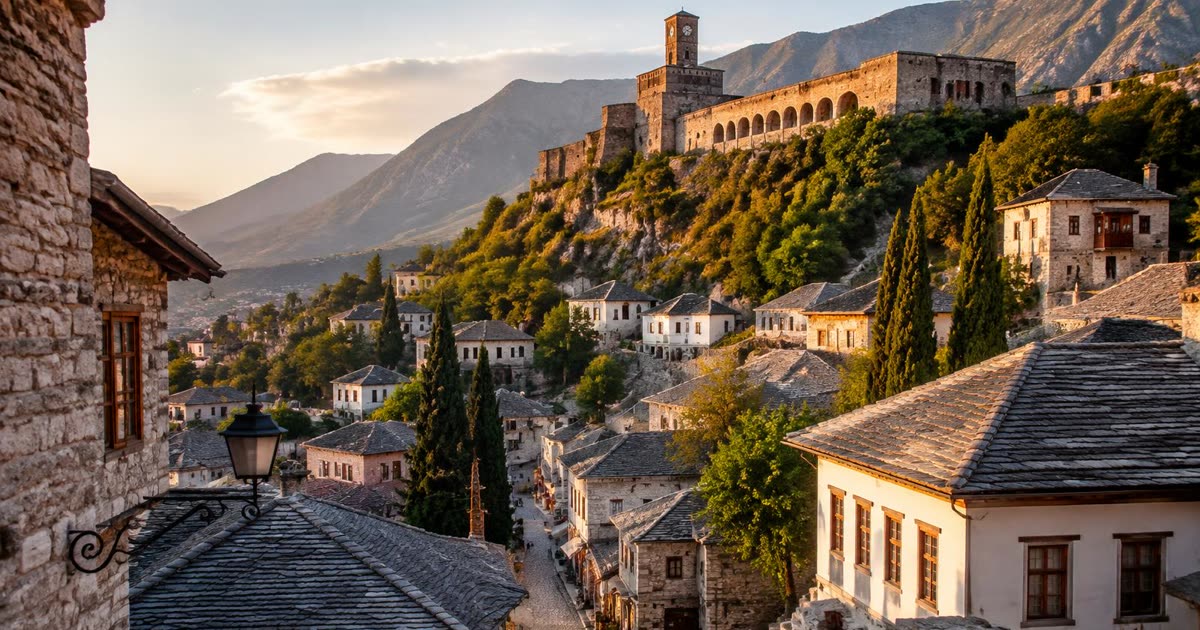
Exploring the Historic Old Villages of the Drino Valley
Updated 2026-11-02 · 6 min read · Prices and schedules change — check locally.
How to visit the Drino Valley villages from Gjirokastër
- Rent a car or hire a local driver in Gjirokastër, as public furgon buses to smaller villages are infrequent.
- For Libohovë, follow SH4 south towards the border and turn east; for Antigonea, take the eastbound road from lower Gjirokastër, cross the bridge and turn right.
- Follow the winding mountain roads to reach higher elevation villages like Labovë e Kryqit.
- Allocate a full day to visit 2-3 villages due to the slow pace of rural roads.
Which are the best villages to visit in the Drino Valley?
Libohovë and Labovë e Kryqit are the most significant cultural stops, while Antigonea offers the best archaeological remains.
Libohovë is set on a hillside and is dominated by its castle and a centuries-old plane tree in the centre. It provides a view over the entire valley and has a distinct Ottoman atmosphere. Labovë e Kryqit is more remote and is renowned for the Church of the Holy Cross, an architectural gem with intricate brickwork. Saraqinisht is another notable stop, serving as the gateway to the ruins of Antigonea. The surrounding region is known for traditional dairy products and mountain honey.
What is the historical significance of the Church of Labovë e Kryqit?
This medieval Byzantine church is one of the oldest and most beautiful religious structures in Albania.
The Church of the Dormition of the Virgin (Labovë e Kryqit) features high-domed architecture and walls decorated with frescoes and ceramic tiles. Legend associates its founding with Emperor Justinian, though the current structure dates primarily to the 10th or 13th centuries. It once reportedly housed a relic of the True Cross.
How do you get to the Drino Valley villages?
Private transport is useful for combining stops on narrow rural roads, although Libohovë is also accessible by bus.
While Libohovë is accessible via a paved road from the SH4 highway, Labovë e Kryqit and Antigonea are also accessible by paved roads, though the winding approaches call for careful driving. Taxis from Gjirokastër are available; agree the itinerary and total fare before setting out. Bus and minibus services vary by destination. Libohovë has several listed daily departures from Gjirokastër; confirm current outward and return times locally before planning a day trip.
What are the key attractions in the Drino Valley area?
The region offers a mix of Ottoman castles, ancient Greek cities, and natural landmarks.
| Site | Type | Notable Feature |
|---|---|---|
| Antigonea | Archaeological Park | Ancient city walls and mosaic floors |
| Libohovë Castle | Fortification | 18th-century fortress built by Ali Pasha |
| Melan Tekke | Religious Site | Bektashi monastery with valley views |
| The Plane Tree | Natural Monument | Giant tree in Libohovë with a café around its base |
When is the best time to visit the Drino Valley?
Spring and autumn provide the best temperatures for hiking and exploring the outdoor ruins.
In April, May, and June, the valley is lush and green, with wildflowers covering the hillsides. September and October offer cooler air and the harvest season for local produce like grapes and walnuts. Summer temperatures in the valley can frequently exceed 35°C, making midday exploration of unshaded sites like Antigonea uncomfortable.
Sources
Keep reading
- Valbona Valley Travel Guide: Hikes, Stays, and Access
- Exploring Këlcyrë Gorge on the Vjosa River
- Exploring Elbasan Old Town Inside the Castle
- Korçë Old Bazaar: A Guide to Albania's Historic Pazar i Vjeter
- Visiting Voskopojë Village and Its Historic Churches
- Guide to Pilur and Kudhës: Mountain Villages Above Himarë