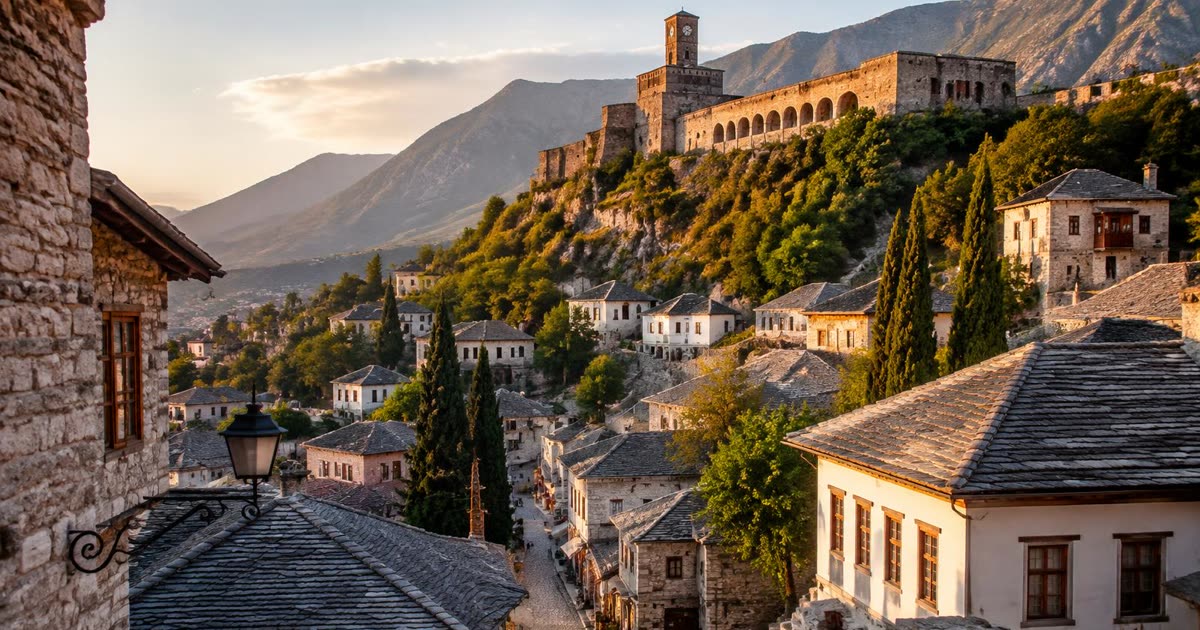
A Guide to Leskovik and the Kolonjë Region
Updated 2026-11-02 · 4 min read · Prices and schedules change — check locally.
How to reach Leskovik
- Travel to Korçë as a primary regional hub.
- Follow the SH75 national road south through Ersekë.
- Continue along the winding mountainous route towards the Greek border until you reach Leskovik town.
What is Leskovik known for?
Leskovik is famous for its mountain viticulture, historical importance as a border town, and its contributions to Albanian polyphonic folk music.
The town sits at an elevation of roughly 900 metres, offering a cool climate ideal for specific grape varieties used in local wine and raki. Historically, it served as a significant administrative centre during the Ottoman period, which is reflected in the remnants of its stone architecture. Musically, the region is the birthplace of many famous Saze ensembles. This tradition of folk music is still celebrated today and remains a core part of the local cultural identity.
What are the top things to do in Kolonjë?
Popular activities include visiting the Sarandapor thermal springs, exploring Ersekë, and hiking the Gramos mountain range.
The Sarandapor springs, located near the Greek border, are known for their natural mineral properties and scenic river setting. For those interested in local history, the town of Ersekë serves as the regional capital and houses a museum dedicated to the area's ethnographic traditions. Outdoor enthusiasts often use the region as a base for trekking. The Gramos mountains provide challenging trails with views over both Albania and Greece, though visitors should ensure they have local maps or guides due to the remote terrain.
When is the best time to visit Leskovik?
The best time to visit is from late spring to early autumn (May to September) to avoid heavy snow and road closures.
Because of the high altitude, winters in Kolonjë are harsh with frequent snowfall, which can make the SH75 mountain road difficult to navigate. Summer offers pleasant temperatures for hiking and outdoor thermal bathing. Autumn is particularly significant for those interested in the local wine harvest. Visiting in September or October allows travellers to experience the traditional process of raki distillation and grape harvesting in the local villages.
What are the road conditions and travel logistics?
Main roads in the Kolonjë region are paved, but some village roads are unpaved; winding stretches require cautious driving.
| Route | Approximate Distance | Estimated Time |
|---|---|---|
| Korçë to Ersekë | 45 km | 1 hour |
| Ersekë to Leskovik | 40 km | 1 hour |
| Leskovik to Përmet | 55 km | 1.5 - 2 hours |
What should I eat and drink in Kolonjë?
The region is known for its local honey, mountain meat dishes, and locally produced Mavrud wines.
Dining in Leskovik typically revolves around 'tave' (oven-baked dishes) and grilled lamb sourced from high-altitude pastures. Local beekeepers produce honey from varied mountain flowers; ask local farms about buying directly from producers. Wine lovers should try the local white and red varieties, which are often produced in small quantities by local families. Raki is also part of Leskovik's longstanding tradition of local wine and spirit production.